
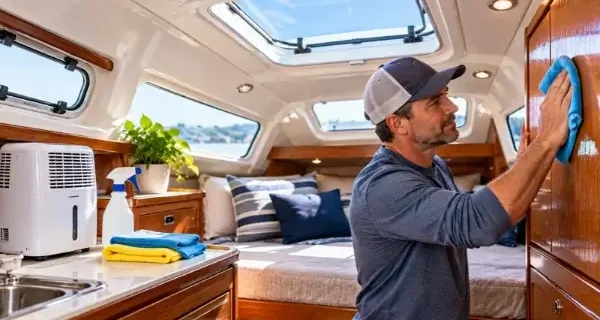
How to Prevent Mold and Mildew in Your Boat Cabin

How to Prevent Mold and Mildew in Your Boat Cabin

A boat cabin is the perfect storm for mold and mildew. Moisture, warmth, and limited airflow create ideal conditions for growth, and once it takes hold, it is tough to get rid of. The good news is that a little prevention goes a long way. Here is how to keep mold and mildew out of your boat cabin.

Control the Moisture

Moisture is the root of the problem, so controlling it is your first line of defense. Fix any leaks promptly, wipe down wet surfaces, and address standing water right away. Keeping humidity low inside the cabin makes it far harder for mold and mildew to get a foothold in the first place.

Keep the Air Moving

Stagnant air invites mildew. Whenever possible, open hatches and ports to let fresh air circulate, especially after a day on the water. When the boat is closed up, small vents, louvered doors, or a solar-powered vent fan help keep air moving and prevent that damp, musty environment mold loves.

Use Moisture Absorbers

Dehumidifiers and moisture-absorbing products are a boater’s best friend. Place moisture absorbers in enclosed spaces, lockers, and cabinets where damp air collects. For boats with shore power, a small dehumidifier can keep the cabin dry during storage. These simple tools make a big difference in humid conditions.

Clean and Dry Soft Goods

Cushions, bedding, towels, and clothing hold moisture and feed mildew. Remove damp items, let them dry thoroughly, and avoid storing anything wet in the cabin. During extended storage, consider taking cushions home or standing them on edge so air can circulate around them.

Stay Ahead With Regular Checks

Prevention is an ongoing effort. Check your cabin regularly for early signs of mildew, especially in corners, lockers, and behind cushions. Catching a small spot early and wiping it down with an appropriate cleaner keeps it from spreading into a bigger problem.

A Final Thought

Preventing mold and mildew comes down to controlling moisture, improving airflow, and staying vigilant. Keep your cabin dry and well ventilated, use moisture absorbers, and check often. A little effort keeps your cabin fresh and comfortable all season long.…

The Benefits of Regular Outboard Motor Maintenance

The Benefits of Regular Outboard Motor Maintenance

For boat owners, the outboard motor is more than just an engine, it’s the heart of your vessel and the key to every adventure on the water. While it’s tempting to just launch and go, a consistent maintenance routine is the single most important practice for ensuring your time spent boating is fun, safe, and cost-effective. Let’s dive into the core benefits of keeping your motor in top shape.

Enhanced Reliability and Safety

The most immediate benefit of regular maintenance is unwavering reliability. A well-maintained motor starts when you need it to and runs smoothly throughout your trip. Routine checks of critical systems, like fuel lines, cooling intakes, and electrical connections, directly prevent the most common causes of failure on the water. This proactive approach minimizes the risk of being stranded far from shore, turning a potential crisis into a minor checklist item. Peace of mind is priceless, and it comes from knowing your motor is prepared.

Improved Performance and Fuel Efficiency

A clean motor is an efficient motor. Simple tasks like changing spark plugs, using fuel stabilizer, and ensuring the propeller is undamaged have a dramatic impact. Your engine will maintain optimal horsepower, provide smoother acceleration, and burn fuel more completely. This translates to better mileage, more power when you need it, and a noticeably quieter, smoother ride. You’re not just maintaining the motor; you’re optimizing your entire boating experience.

Longevity and Resale Value

Think of maintenance as an investment in your motor’s future. Flushing the engine after saltwater use prevents corrosive buildup, changing the gear oil protects the lower unit, and lubricating linkages prevents wear. These steps combat the two biggest enemies of marine engines: corrosion and neglect. By adhering to the manufacturer’s service schedule, you dramatically extend the engine’s operational life. Furthermore, a meticulously maintained motor with a detailed service log commands a significantly higher resale value, ensuring you recoup your investment when it’s time to upgrade.

In short, a small amount of time and resources dedicated to regular outboard maintenance pays massive dividends. It safeguards your weekends, protects your wallet from major repairs, and ensures your boat is always ready to deliver the freedom and joy you bought it for. Make maintenance a ritual, and your motor will return the favor for years to come.…

How to Troubleshoot Common Electrical Issues on Your Boat

How to Troubleshoot Common Electrical Issues on Your Boat

A reliable electrical system is essential for safe and enjoyable boating. When something stops working, it can be stressful, but most problems come down to a few common culprits. By understanding what to look for, you can often troubleshoot minor issues on your own before calling a professional.

Check Your Battery First

When electrical components fail, the battery is one of the first things to inspect. Start by ensuring the battery terminals are clean, tight, and free from corrosion. A loose or dirty connection can interrupt power flow to your entire system. Test the battery voltage with a multimeter. If it reads low, try charging the battery or switching to a known good one. Also check the condition of the battery cables, as worn or frayed wires can cause intermittent power loss.

Inspect Fuses and Breakers

According to Bellingham boat mechanics, a blown fuse or tripped breaker is one of the most common reasons why lights, pumps, or electronics suddenly stop working. Locate your boat’s fuse panel and check for any blown fuses. Replace them with the correct amperage rating. For breaker-based systems, reset any tripped breakers and monitor if they trip again, which can indicate a deeper issue such as an overload or short circuit.

Look for Faulty or Loose Wiring

Boats experience vibration, moisture, and movement that can loosen wiring connections over time. Inspect connectors, terminals, and wire insulation for signs of wear, corrosion, or damage. Pay close attention to grounding wires, as poor grounding is a frequent source of electrical problems. If you find corroded connectors, clean or replace them as needed.

Test Your Switches and Devices

Sometimes the issue is as simple as a faulty switch or device. Toggle the switch multiple times to see if it reconnects. If your device uses inline fuses or separate power sources, check those as well. When in doubt, test the component with a multimeter or swap it with a known working device.…